Bowie, Maryland
Emergency Water Extraction in Bowie, MD
Emergency Water Extraction in Bowie, Maryland, with published price ranges up front, the loss scoped with moisture readings on site, and one written figure before any work begins.
Bowie, Maryland
Emergency Water Extraction in Bowie, Maryland, with published price ranges up front, the loss scoped with moisture readings on site, and one written figure before any work begins.
Standing water does not wait for a convenient hour. A supply line lets go behind a washer at midnight, a water heater splits before dawn, and by morning the laundry room floor is under an inch of water that keeps creeping toward the hall. We provide emergency water extraction in Bowie, pulling standing water out fast so the damage stays in the room where it started instead of traveling under walls and into rooms that were dry an hour earlier.
Extraction is the first physical step, and it changes everything that follows. Carpet can sometimes be saved if water leaves quickly. Hardwood has a narrow window before boards cup, and drywall wicks water upward from the base. Getting bulk water out early most often decides whether a Bowie home needs days of drying or weeks of repair.
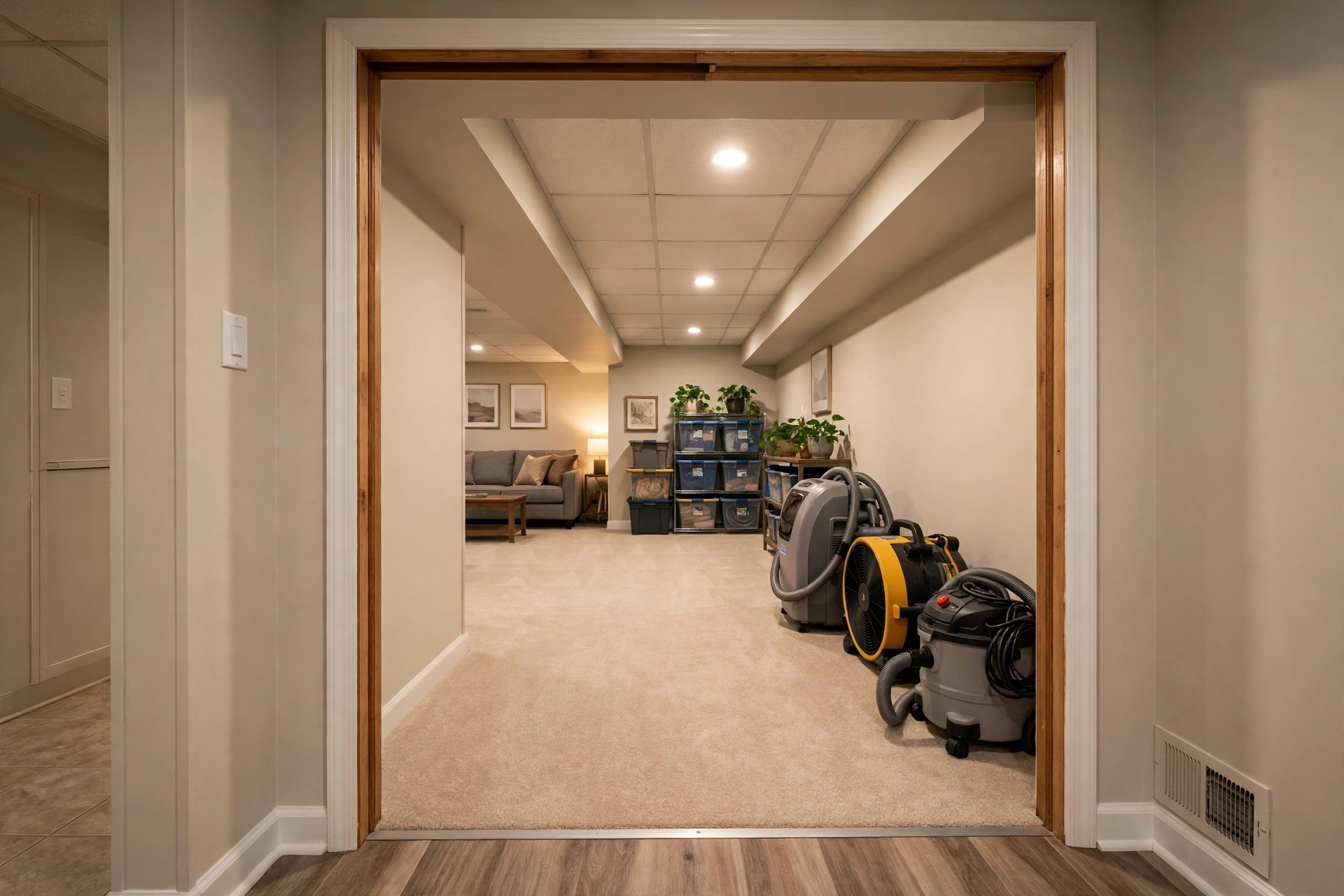
Our crews arrive with truck mounted and portable extraction units matched to the surface in front of them. Hard floors take a tool that squeegees and vacuums in one pass. Carpet takes a weighted wand that pulls water from the carpet and the pad beneath it. Tile, laminate, and basement floors over concrete each need a different approach, and the wrong tool leaves water behind that later shows up as odor and warped trim.
Corners matter more than open floor. Water gathers along baseboards, inside closets, and under appliances. We work those edges deliberately, opening a closet a homeowner assumed stayed dry and checking the room on the other side of a wet wall. Water rarely respects the room where the leak began.
Source control comes first. If a pipe is still feeding the floor, extraction alone cannot win. The main shutoff gets closed, and only then does pumping begin in earnest. Clean Category 1 supply water moves straight ahead. Category 2 and Category 3 water, including any sewage involved loss, calls for added precautions and disposal steps under the IICRC S500 standard.
Belair gives this service a steady workload. Many of those 1960s homes still run original copper and cast iron, and copper that old develops pinhole leaks that spray inside a wall for hours before a stain appears. Water heaters there are often on a second or third replacement cycle, set on floors that slope just enough to send a tank failure across finished space instead of toward a drain.
Newer subdivisions bring different failures. In Woodmore and Fairwood, finished basements sit below grade with bathrooms and guest suites that put a lot of plumbing low. An ejector pump failure can push water across carpet that looks pristine from the stairs. Clay soil around Bowie holds storm water against foundations, so a heavy downpour can raise groundwater and test every joint in a basement floor at once.
Winter adds a third pattern. Pipes in exterior walls and crawl spaces split during a hard freeze, then thaw and pour once temperatures rise, and gravity carries that water through every level below the break.
The quote form at the bottom of this page starts the process. Tell us where the water is, where it came from if you know, and how long it has been there.
On site we meter before we extract. A moisture meter and a thermal scan show how far water has traveled under flooring and inside wall bases. Nothing dry gets torn into without cause. Nothing wet gets declared dry by touch alone. Readings get recorded room by room, because those first numbers anchor the drying plan and the documentation file that follows.
Extraction runs until the tools pull almost nothing, then a little longer at the edges. Saturated pad that cannot be saved comes out in sections so the slab or subfloor can be reached. Furniture gets blocked up or moved to a dry room. Once standing water is gone, air movers and dehumidification take over, covered in detail on our structural drying page.
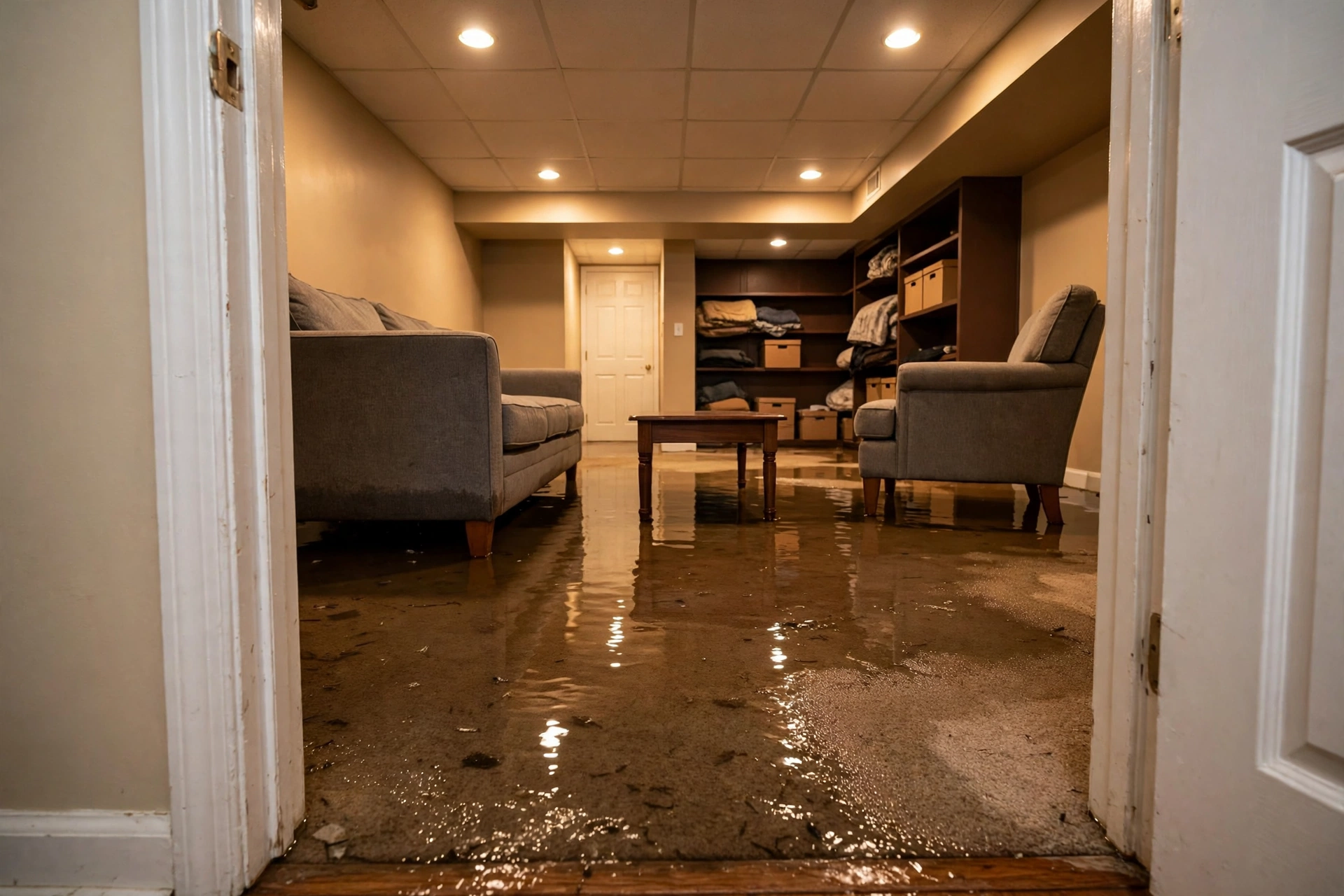
A copper supply line in a Belair ranch developed a pinhole leak inside a laundry room wall and sprayed water across the laundry, hall, and a finished family room before the main shutoff was closed. We extracted water from tile and carpet, pulled saturated pad from the family room, and opened the base of the wet wall section to release water trapped behind it. Meter readings mapped the full spread so drying equipment could be placed the same visit.
No Bowie company publishes a local price list, so the figures in this section are published figures from national cost guides, labeled as such to help you plan. Published figures put water mitigation commonly at $1,300 to $5,800 per project, and emergency extraction for a typical Bowie home usually falls at $1,450 to $3,200 within that wider mitigation picture. Published guides put an average restoration project at $3,000 to $3,867 once drying and related work are included beyond extraction alone.
Where a job lands depends on volume and reach. A single room caught within the hour costs less than a whole lower level that sat overnight. Carpet and pad extraction takes longer than hard floors, and sewage involved water or water inside wall cavities moves the figure up. For scale only, published data puts a full insurance claim project including rebuild at around $13,954 on average, an insurance claim figure including rebuild, not an extraction price. Your firm figure follows the site assessment.
Fast extraction protects materials that are still sound. It does not rescue everything. Particleboard vanity bases swell quickly and rarely return to shape, and laminate that took water through the seams often lifts days later. Saying so early is part of the job.
What speed always buys is control. Mold can begin on wet drywall and wood within a day or two in warm conditions, so removing bulk water promptly shrinks that risk. Odor stays lighter. Baseboards have a better chance of drying in place. The claim file also reads cleaner, with early photos and readings showing prompt action limited the loss.
Published figures put water mitigation commonly at $1,300 to $5,800, with emergency extraction for a typical Bowie home usually at $1,450 to $3,200. Published guides put an average restoration project at $3,000 to $3,867 once drying is included. Volume, how long water sat, and whether walls are involved set your place in the range, and the site assessment produces your firm figure.
As soon as it can be done safely. Within hours is best. Wet pad, drywall bases, and wood flooring all get harder to save with every hour they stay saturated. Shut off the source first if you can do so safely, then send the quote form.
Sometimes. Clean water losses caught early often allow carpet to be dried in place, while saturated pad is frequently removed because it holds water against the subfloor. Sewage involved water changes the answer entirely, and affected porous materials are removed for health reasons.
Close the main shutoff if the leak is from plumbing and you know where the valve is. Move small valuables out of wet rooms without standing in water near outlets. Take photos from dry ground. Leave soaked flooring as it is so readings reflect the true spread.
Drying is still needed in nearly every case. Extraction removes bulk water you can see. Structural drying removes moisture held inside drywall, wood, and concrete after the surface looks clear. Skipping that phase is how hidden moisture turns into odor and mold weeks later.
Yes, as a documentation service. We record readings, photos, and the scope of work so you have a file for your carrier. Homeowner policies usually cover sudden and accidental damage, while rising outdoor water generally needs a separate flood policy.
Tell us what got wet and when. We read every request that comes in and respond with the published range for that kind of loss and the next step, starting with a visit to take moisture readings and scope the drying plan.
Prefer to talk it through first? Send the form and we will call you back at the number you give us.