Structural Drying and Dehumidification in Bowie, MD
Structural Drying and Dehumidification in Bowie, Maryland, with published price ranges up front, the loss scoped with moisture readings on site, and one written figure before any work begins.
Structural Drying and Dehumidification in Bowie, MD by Bowie Water Damage Restoration Company
A floor can look dry and still be wet underneath. That gap between appearance and reality is where structural drying lives. We provide structural drying and dehumidification in Bowie, using air movement, controlled humidity removal, and daily moisture readings to bring walls, floors, and framing back to dry standards after water has gotten into the structure itself.
Surface drying happens on its own. Structural drying does not. Gypsum holds moisture deep in its core long after the face feels dry. A concrete slab can release water for days. Wood framing behind a closed wall has almost no airflow, so without directed air and dehumidification it can stay damp through a full week of pleasant weather. Our work closes that gap on a measured schedule instead of a guess.
The Science Behind a Drying Plan
Every drying plan starts with classification. Category describes how clean the water was, from Category 1 clean supply water through Category 3 grossly contaminated water. Class describes how much of the room is wet and how hard those materials are to dry, from a small Class 1 corner through Class 4 specialty drying for deep water trapped in hardwood, plaster, or concrete. Category and class come from the IICRC S500 standard, and together they set equipment counts, safety steps, and realistic timelines.
Equipment follows the readings, not a fixed package. Air movers push dry air across wet surfaces so moisture leaves the material and enters the air. Dehumidifiers then pull that moisture out of the air and drain it away, either refrigerant units for warm conditions or desiccant units where low humidity targets or cooler spaces demand them. In a closed Bowie basement we often create a drying chamber with plastic containment, shrinking the space the machines must condition so progress speeds up and unaffected rooms stay comfortable.
Placement matters as much as power. One air mover aimed wrong can leave a wet stripe along a wall base for days, while the same machine angled correctly dries the whole run evenly. In winter losses, temperature matters too, since cold spaces hold little moisture in the air and dry slowly until warmed.
Drying Bowie Housing Stock, Room by Room
Woodmore homes test drying plans with size and finish level. Large finished basements there combine drywall, engineered wood, tile over concrete, and built in cabinetry in one open space, and each material releases moisture at a different rate. Tile may read dry on day one while the cabinet bases beside it still release water on day four. We meter each material on its own schedule and pull equipment in stages.
Fairwood and Mitchellville bring tighter, newer construction. Tight homes trap humid air, which helps heating bills and hurts passive drying, so mechanical dehumidification does the heavy lifting there.
Older Belair framing presents the opposite problem. Plaster over lath in the oldest sections dries slowly and punishes impatience. Hardwood that cupped while wet sometimes flattens as moisture equalizes, so we track board readings over several days before anyone calls a floor lost or saved.
Monitoring, Adjustments, and Knowing When to Stop
Drying without monitoring is just running fans. We return on a monitoring rhythm, take readings at the same marked points, and log them against the first day baseline. A psychrometric reading of the air tells us whether the dehumidifiers are keeping up. A pin meter tells us what the studs are doing. A pinless meter scans a floor quickly for a pocket the first pass missed.
Adjustments are normal, and they show the plan working rather than failing. A machine gets added where a wall lags. A baseboard comes off to let air reach a wet sill plate, with small vent holes drilled where that step saves the wall. Demolition stays surgical. Where water sat long, Category 3 water was involved, or readings refuse to move, we say plainly that a section needs to come out so the structure behind it can dry.
The stop point is a standard, not a feeling. Materials are dry when their moisture content returns to the range of unaffected material in the same home, confirmed by readings on consecutive checks. Equipment leaves only after that confirmation, and the final log stays with your documentation file.
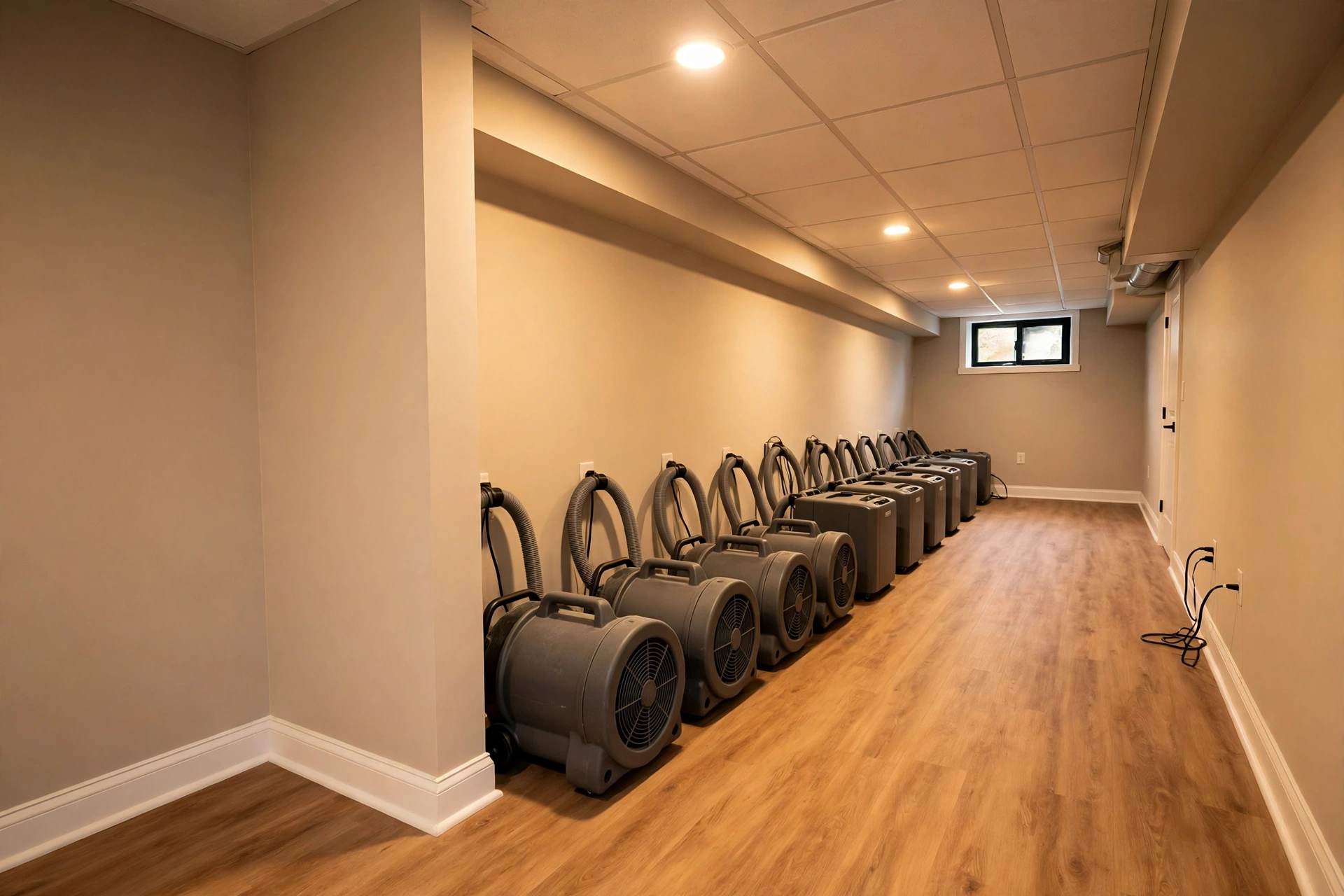
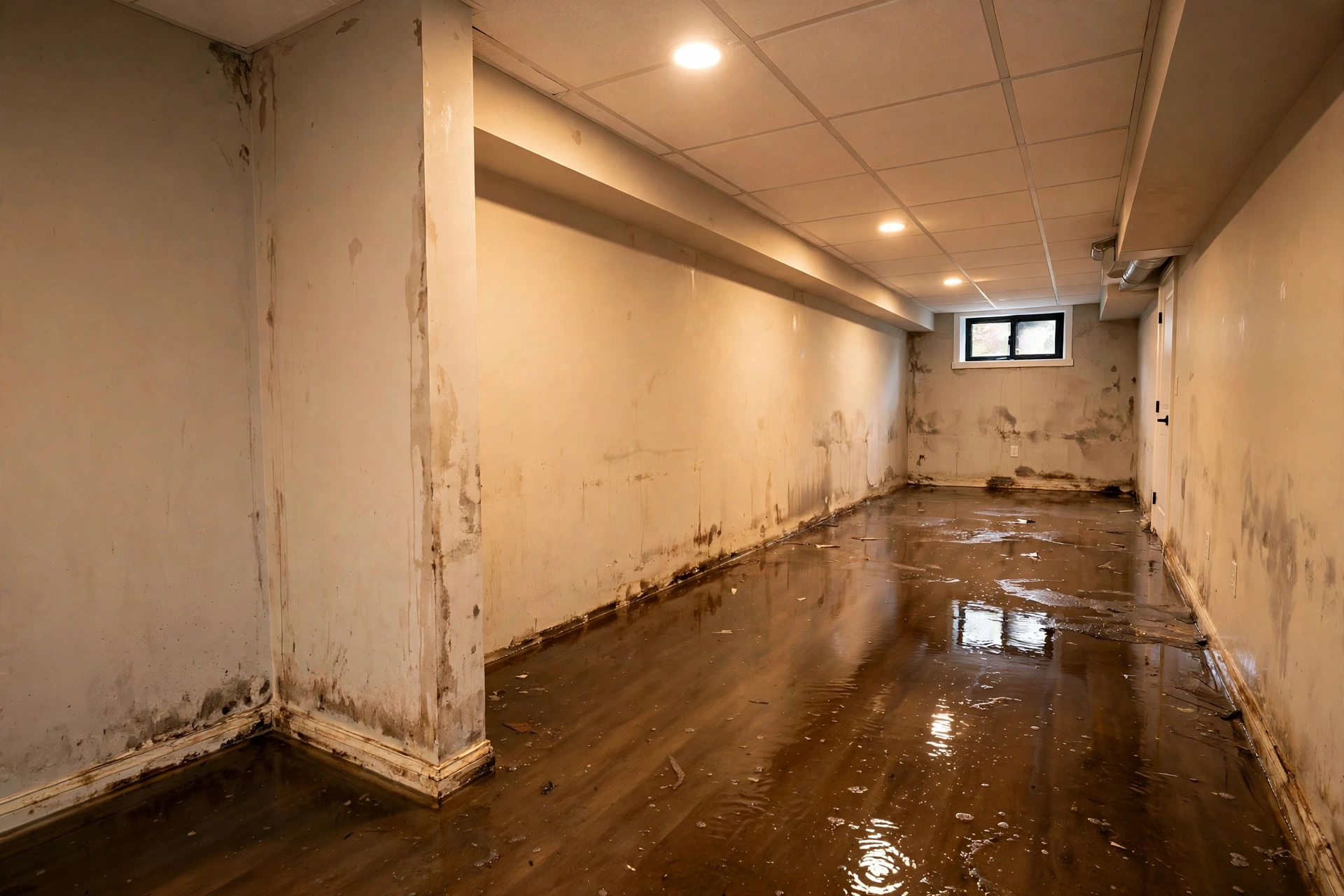
Recent Project: Structural Drying and Dehumidification in Woodmore
BEFOREAFTER
A supply line failure in a Woodmore home wet a large finished basement with mixed flooring, drywall partitions, and built in cabinetry along one wall. After extraction, we built a contained drying chamber, set air movers and dehumidification matched to the loss class, and vented one cabinet base and a section of baseboard to reach trapped moisture. Daily readings guided two equipment adjustments, and all materials reached dry standard before equipment was removed in stages.
Turnaround
Five days of monitored drying, with daily reading visits.
Final Price
$3,565
Structural Drying and Dehumidification Cost in Bowie, MD
Drying bills track how much material stayed wet, not how the room looks. No Bowie price list is published, so these are published figures from national cost guides, labeled as such. Structural drying with dehumidification for a typical Bowie loss usually falls at $1,800 to $4,600. Water mitigation commonly runs $1,300 to $5,800 per project, and published guides put an average restoration project at $3,000 to $3,867.
Room count and loss class drive the total more than any single machine rate. More wet material means more equipment and more monitoring days, and Class 4 drying for hardwood or concrete runs longer than a drywall and carpet loss. For context only, published data puts a full insurance claim project including rebuild at around $13,954 on average, labeled here as an insurance claim figure including rebuild, well beyond a drying only scope. Your firm figure comes from the assessment readings.
Why Controlled Drying Protects the Rest of the House
Uncontrolled moisture migrates. Humid air from a wet basement condenses on cooler surfaces upstairs and feeds odor that seems to come from nowhere. Framing that stays damp gives mold the sustained moisture it needs on drywall paper and wood. Controlled drying holds humidity at levels where those problems do not get started.
There is also a rebuild argument. New flooring laid over a slab that still reads wet will fail, sometimes within one season. Paint over a damp wall blisters. Drying to a verified standard before any rebuild protects the money spent on that rebuild.
How much does structural drying cost in Bowie, MD?
Published figures put water mitigation commonly at $1,300 to $5,800, with structural drying and dehumidification usually at $1,800 to $4,600 for a typical Bowie loss. Published guides put an average restoration project at $3,000 to $3,867. Wet area size, loss class, and drying days set your figure, confirmed by the assessment readings.
How long does structural drying usually take?
Many residential losses reach dry standard in three to five days. Dense materials change that math. Concrete, plaster, and hardwood in a Class 4 loss can take longer, and monitoring readings decide the end date rather than a calendar promise made before the first visit.
Can walls dry without being opened up?
Often yes. Baseboard removal and small vent holes can deliver air to a wet wall cavity while leaving the drywall face intact, provided the water was clean and readings keep improving. Long saturation, contaminated water, or stalled readings can make opening a section the honest choice, and we explain that call with the meter numbers in hand.
What moisture level counts as dry?
Dry means the material has returned to the moisture range of comparable unaffected material in the same home, verified with meters. There is no single number that fits every wood species, drywall assembly, and slab, which is why baseline readings from a dry room matter so much.
Why do you visit more than once during drying?
Conditions change daily. A room that loses moisture quickly on day one can stall on day three if a hidden pocket starts feeding the air. Monitoring visits catch stalls early, adjust equipment, and build the dated log that supports your claim file.
Does drying prevent mold?
Prompt, controlled drying sharply lowers the risk, because mold needs sustained moisture on a food source such as drywall paper or wood. Drying cannot undo growth that already started before the call, which is why any visible growth found during monitoring gets addressed as its own scope of work.
Get Your Water Damage Quote
Tell us what got wet and when. We read every request that comes in and respond with the published range for that kind of loss and the next step, starting with a visit to take moisture readings and scope the drying plan.
Prefer to talk it through first? Send the form and we will call you back at the number you give us.