Bowie, Maryland
Roof Leak Water Damage in Bowie, MD
Roof Leak Water Damage in Bowie, Maryland, with published price ranges up front, the loss scoped with moisture readings on site, and one written figure before any work begins.

Bowie, Maryland
Roof Leak Water Damage in Bowie, Maryland, with published price ranges up front, the loss scoped with moisture readings on site, and one written figure before any work begins.
Rain finds the weak points a roof has been hiding. A lifted shingle edge, tired flashing at a chimney or vent, or a seam that opened over winter may leak only in a hard wind driven storm, which makes roof leak water damage in Bowie maddening to pin down. We dry and clean up the interior damage roof leaks cause, trace the wet path inside the house, and leave the assembly dry and documented so repairs follow in the right order.
Our scope is the water inside your house, the wet insulation, drywall, and framing between the roof deck and the rooms below.
Water rarely drips straight down from its entry point. It runs along the underside of the deck, follows a rafter, and drops where it meets a wall top plate or a ceiling penetration, sometimes a full room away.
Attic conditions shape the loss. Wet attic insulation holds water over the ceiling board and keeps feeding it after rain ends, and a hot attic over wet insulation is a fast route to growth on ceiling paper and framing. Repeated small leaks do cumulative harm, since each event wets the same bay and closed attics rarely dry on their own between storms.
A visit starts with moisture mapping of ceilings and upper walls, plus an attic check where access allows. Saturated attic insulation over a wet ceiling generally comes out, because it blocks drying of the board below and adds weight the wet ceiling was never meant to carry.
Cavities then get directed airflow, rooms get dehumidification, and framing and drywall are dried to the IICRC S500 standard with readings logged at each check. Drywall that sagged or softened is removed in clean sections. Growth found on attic framing or ceiling paper is treated following the IICRC S520 standard.
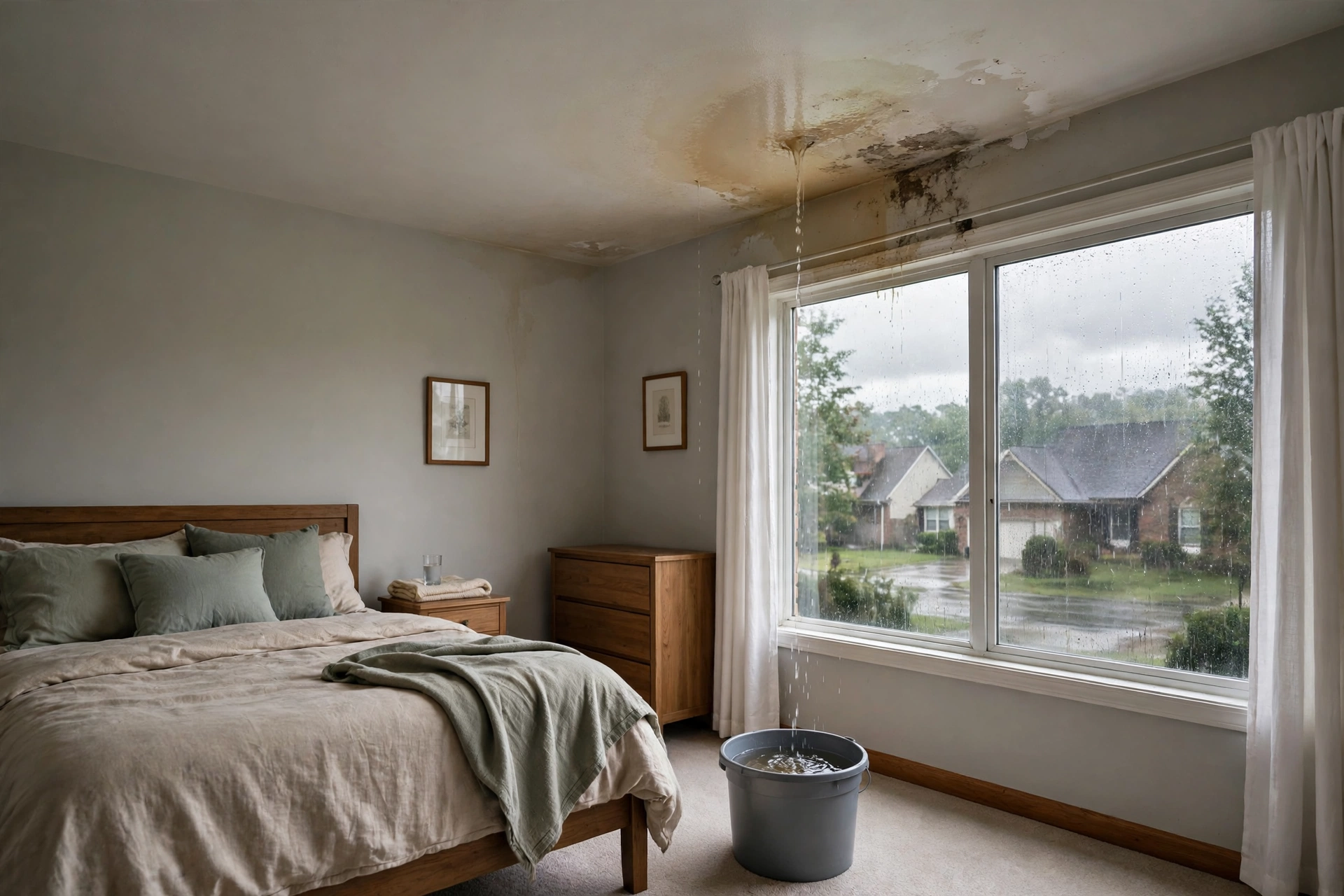
Repeated storm leaks at a vent flashing in a Belair home wet the attic insulation and the primary bedroom ceiling below, staining the ceiling and starting growth on the ceiling paper in one bay. Our crew removed the soaked insulation over that bay, treated the growth area, and dried the ceiling assembly and attic framing. Readings confirmed the ceiling and framing dry, ready for flashing repair above and drywall work below.
No Bowie company publishes a local price list, so use these published figures, labeled as published figures, for planning. Published guides put roof leak water damage work at $1,550 to $4,100. Published guides also put water mitigation commonly at $1,300 to $5,800, and the average restoration project at $3,000 to $3,867 in published cost guides. A single bay dried in place sits low. Insulation removal, ceiling cuts, and growth treatment push a job higher.
Order matters with roof losses. Drying the interior before the roof entry is fixed can still be right where growth or saturated insulation is active, but finish repairs should wait until the roof has proven itself through rain after the flashing or shingle work.
Documentation bridges the trades. Our readings and photos of the wet path help the roofer narrow the search from above, and they give your claim file a story connecting the storm, the entry, and the interior scope.
Published guides put interior roof leak work at $1,550 to $4,100, with water mitigation commonly at $1,300 to $5,800 in published guides. Insulation removal and ceiling work move a job up the range. Roof repair is separate.
Interior evidence narrows the area, since water paths along rafters leave a readable trail of readings and staining. The exact entry still needs confirmation on the roof by a roofer.
Lightly damp insulation can sometimes dry with airflow. Saturated insulation over a ceiling usually comes out, because it holds water against the board, adds weight, and blocks drying.
Most jobs take three to five days of drying after insulation decisions are made, verified by readings in the ceiling and framing. Equipment is removed when the assembly reaches dry range.
Yes for finish work. Drying and removal can proceed so wet material does no further harm, but new drywall and paint should wait until the roof repair has been tested by rain.
Homeowner policies often cover interior damage from a sudden roof failure or storm damage to the roof, while wear and age related leaks are treated differently. We document the interior loss fully so that distinction is clear in the file.
Tell us what got wet and when. We read every request that comes in and respond with the published range for that kind of loss and the next step, starting with a visit to take moisture readings and scope the drying plan.
Prefer to talk it through first? Send the form and we will call you back at the number you give us.