Bowie, Maryland
Reconstruction After Water Damage in Bowie, MD
Reconstruction After Water Damage in Bowie, Maryland, with published price ranges up front, the loss scoped with moisture readings on site, and one written figure before any work begins.
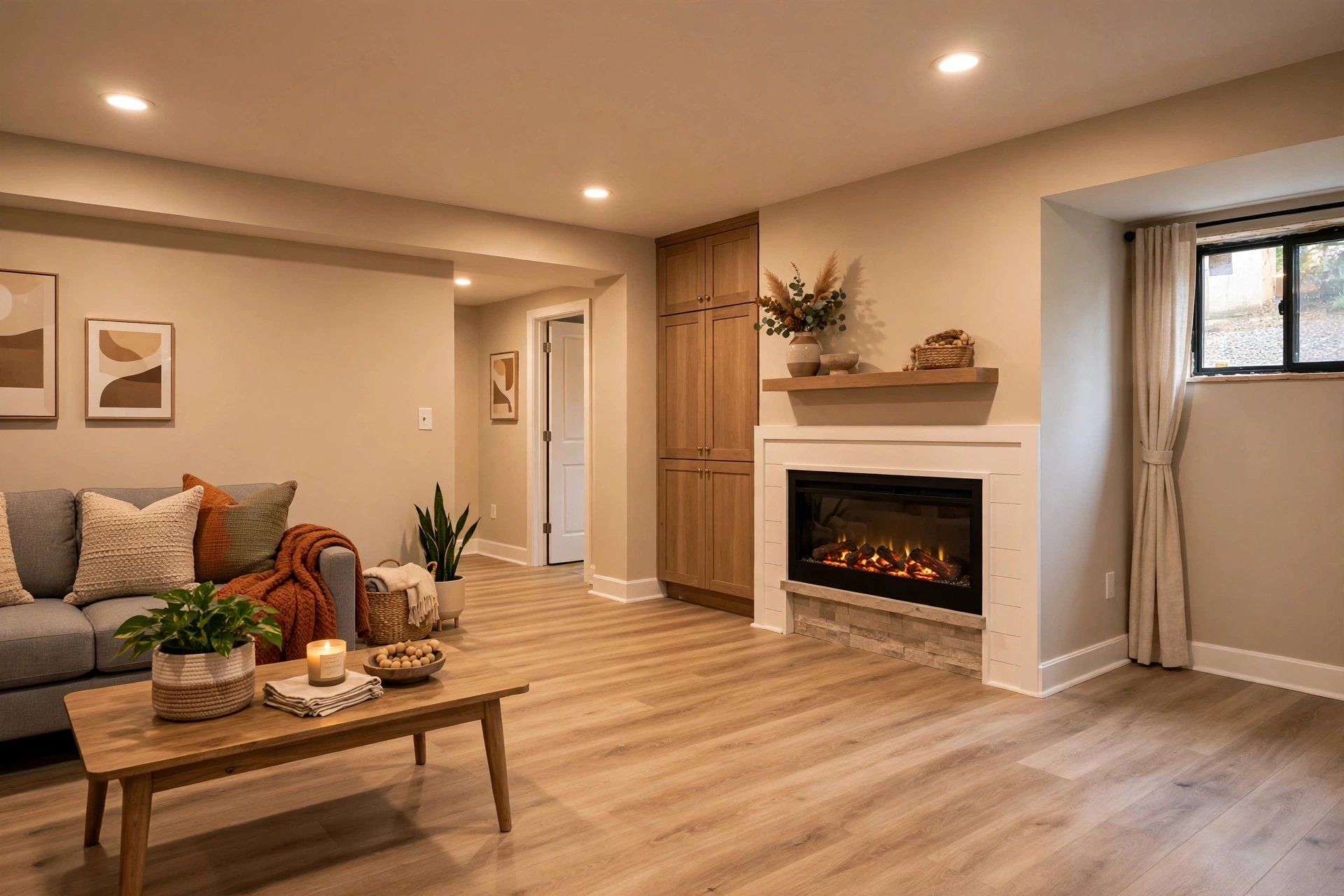
Bowie, Maryland
Reconstruction After Water Damage in Bowie, Maryland, with published price ranges up front, the loss scoped with moisture readings on site, and one written figure before any work begins.
Drying a house and rebuilding it are two different jobs. Mitigation ends when the structure is clean and readings say dry. Reconstruction after water damage is the stage that follows, putting back drywall, flooring, trim, cabinets, and paint so rooms return to use. We explain that split clearly because Bowie homeowners often assume one crew and one phase cover both, and Maryland rules treat them as separate work.
In Maryland, repair and reconstruction after mitigation fall under the state home improvement framework. That stage is distinct from extraction and drying. Permits for reconstruction work are handled through Prince George's County, as a general market fact, where the scope requires them.
The rebuild list mirrors the removal list from mitigation. Drywall sections cut during drying go back first, followed by tape, finish, and paint. Baseboard and trim return once walls are closed. Flooring comes after walls in most rooms, whether new carpet and pad in a basement family room or replacement boards where hardwood sections were removed.
Cabinet work appears in kitchen and bath losses. A cabinet base removed for drying may be repaired or replaced, with counters reset after it. Nothing should start until the dry record for the room is complete. Chapel Forge and Fairwood, with their finished basements, see the longest rebuild lists, because finished space has more to restore.
Rebuilding over hidden moisture undoes both stages. New drywall sealed against a damp stud cavity traps water that mitigation worked days to remove. Paint blisters. Odor returns through fresh finishes, and the room gets opened a second time at greater cost than patience would have charged.
That is why the handover matters. Our mitigation file closes with final moisture readings, photos of opened areas, and a scope of exactly what was removed. A reconstruction contractor can price and plan from that record without guessing what sits inside a closed wall. Timing follows materials too, since flooring and cabinets carry lead times, and county permit steps sit inside the rebuild schedule rather than the drying schedule.
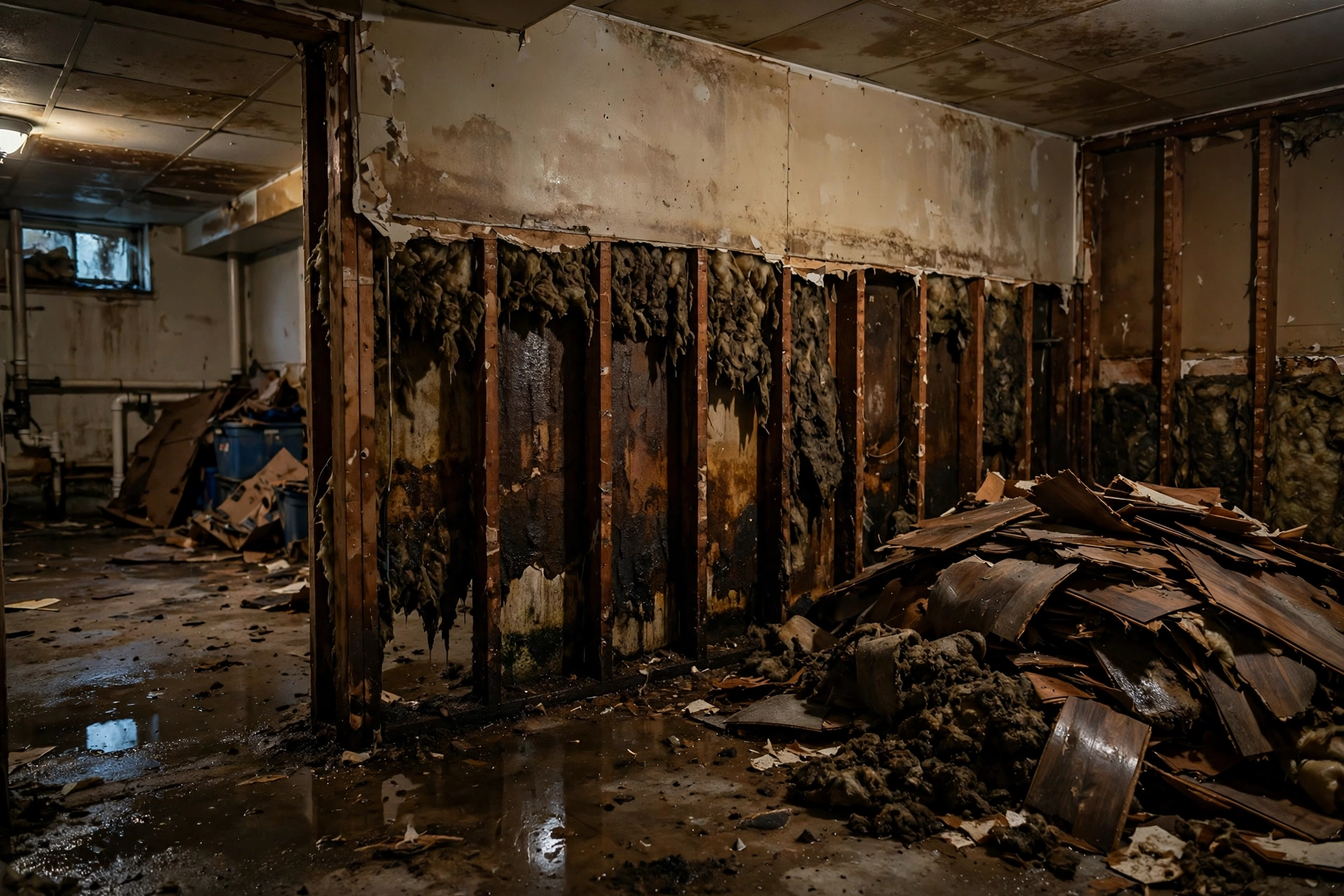
After a supply line loss in Chapel Forge was extracted and dried under a separate mitigation scope, the reconstruction stage replaced the removed lower drywall and baseboard in a finished basement bedroom and adjoining hall. New flooring and pad went in after the walls were finished and painted, and a swollen closet door was replaced and fitted. The rebuild was sequenced from the mitigation removal record, so each item removed during drying had a matching item restored.
No Bowie company publishes a local price list, so plan from published figures labeled as published figures. For this service, published figures in the brief put reconstruction after water damage at $4,500 to $9,800. Published guides put water mitigation commonly at $1,300 to $5,800, separate from rebuild, and a full insurance claim project including rebuild averages around $13,954 in published data, labeled here as an insurance claim figure including rebuild.
Rebuild cost follows finish level more than square footage alone. Paint grade drywall and carpet in one basement room sit low. Hardwood, tile, cabinets, and multiple rooms sit high.
Decide flooring and cabinet questions early. Those choices drive most schedules, and waiting until drywall is painted to pick a floor adds idle weeks. Keep mitigation and reconstruction scopes in writing, side by side, so which stage removed a wall section and which replaces it is never in doubt.
Published figures for this service put reconstruction at $4,500 to $9,800. A full insurance claim project including rebuild averages around $13,954 in published data, as an insurance claim figure including rebuild. Finish level and room count set your place inside the range.
No. Mitigation ends at verified dry readings. Reconstruction is the separate Maryland home improvement stage after it, covering drywall, flooring, trim, and paint, with county permits through Prince George's County where required.
After final readings confirm the structure is dry and the mitigation record is complete. Finishes over wet framing trap moisture and lead to reopened rooms.
Reconstruction permits are handled through Prince George's County where the scope requires them, as part of the rebuild stage. Mitigation does not carry that permit step.
Upgrades and small layout changes are common at this stage, since finishes are already open. Any change is priced inside the reconstruction scope, separate from mitigation.
Keep final readings, photos of opened walls and floors, and the written removal scope. That record lets a rebuild contractor price accurately.
Tell us what got wet and when. We read every request that comes in and respond with the published range for that kind of loss and the next step, starting with a visit to take moisture readings and scope the drying plan.
Prefer to talk it through first? Send the form and we will call you back at the number you give us.