Bowie, Maryland
Insurance Claim Documentation in Bowie, MD
Insurance Claim Documentation in Bowie, Maryland, with published price ranges up front, the loss scoped with moisture readings on site, and one written figure before any work begins.
Bowie, Maryland
Insurance Claim Documentation in Bowie, Maryland, with published price ranges up front, the loss scoped with moisture readings on site, and one written figure before any work begins.
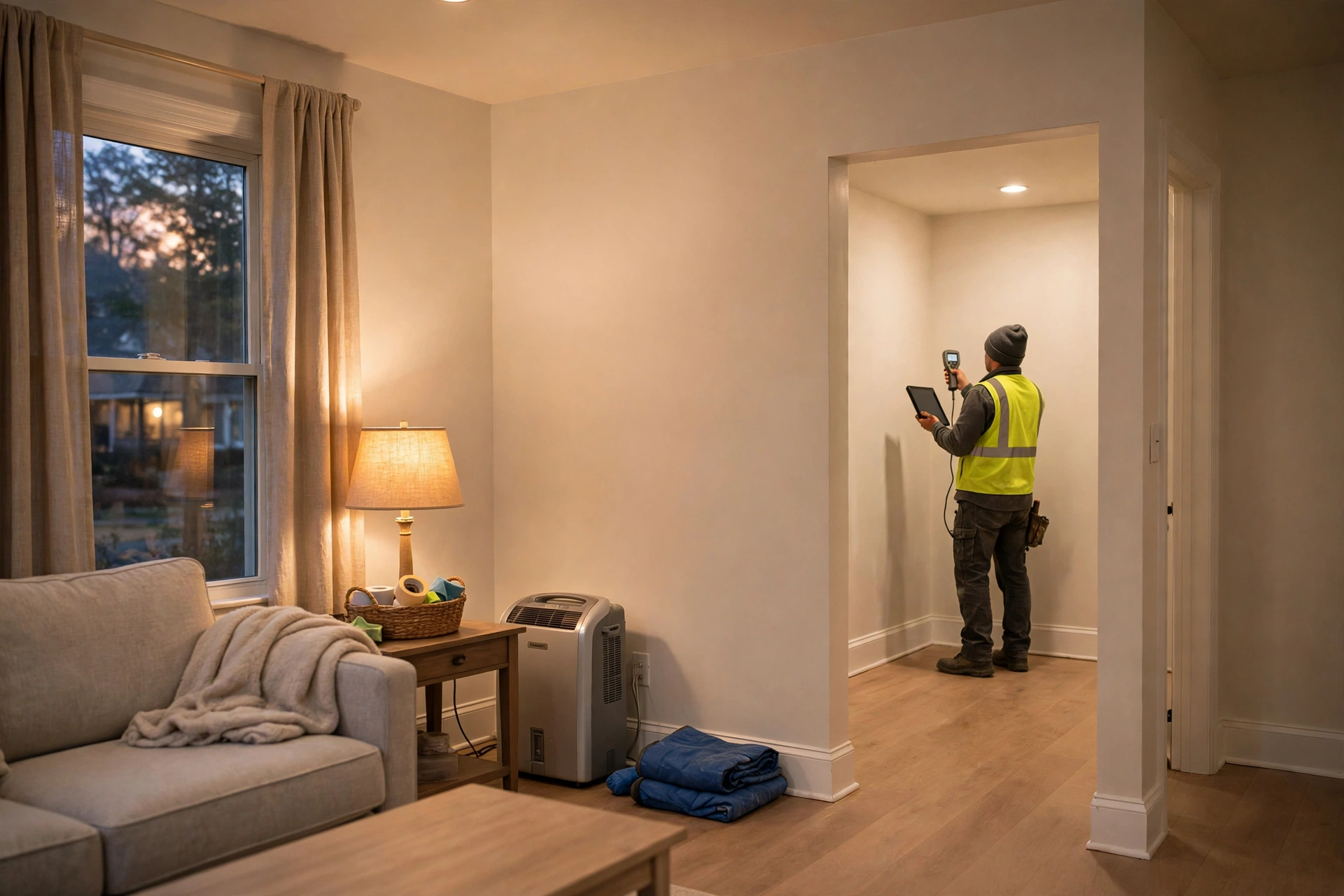
A water claim stands or falls on its paper. Adjusters work from photographs, moisture readings, dates, and a written scope, often without ever standing in the wet room. We provide insurance claim documentation in Bowie as a factual record of a loss, built during mitigation, describing what was found, what was done, and what readings showed at each stage.
That description sets the boundary of this service. Documentation records a loss. It does not decide coverage, and this page makes no promise about claim approval, coverage, or any outcome. Those decisions belong to the insurer under the policy the homeowner holds. A complete and accurate file gives every party the same facts to work from.
Photographs come first, taken as found before material moves. Source photos show the failed pipe, hose, or entry point where it can be identified. Wide and close views of damaged materials sit alongside them.
Moisture readings form the second layer, logged by material and location at the first visit, during drying, and at the verified dry close. A log shows progression a single snapshot cannot. The written scope is the third layer, listing affected rooms and materials, what was removed and why, and the category and class of the loss. Dates tie the file together.
A homeowner describing a very wet basement and an adjuster reading that phrase can picture two different rooms. A dated reading for a stud at a stated moisture level, beside a photo of the same wall, leaves far less room for dispute about conditions on that day.
Documentation also separates stages cleanly. Mitigation, meaning extraction, cleanup, and drying, is recorded apart from any later rebuild, matching how claim files are usually organized. As general facts only, homeowner policies usually cover sudden and accidental water damage, rising water generally needs a separate flood policy, and sewer backup usually needs a specific endorsement.
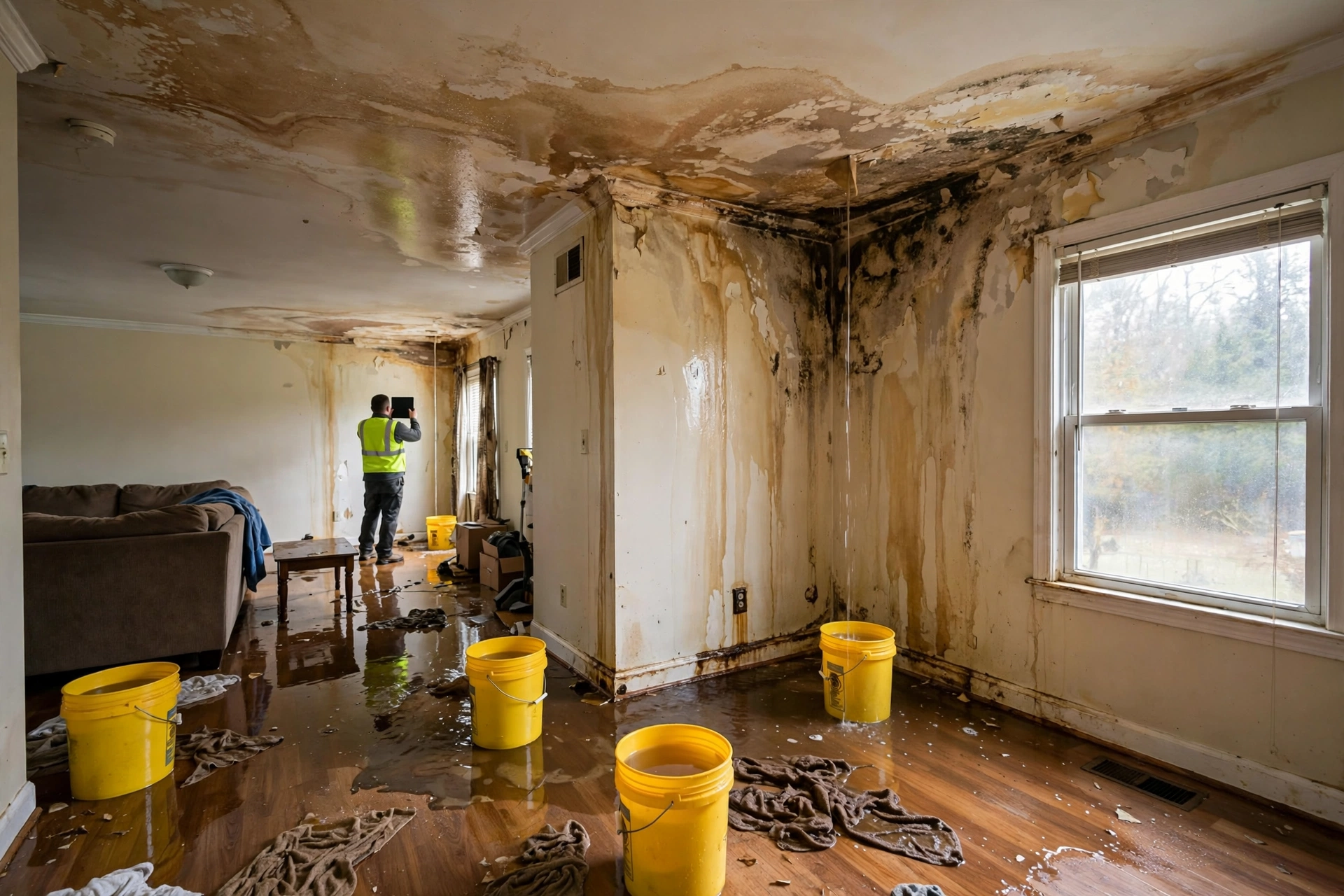
A basement water loss in Long Ridge from a failed supply line needed a complete documentation package alongside mitigation, covering a finished family room, a storage area, and a half bath. We photographed every affected room as found, logged moisture readings in framing, drywall, and subfloor across three drying visits, and wrote a scope listing removed baseboard and pad by room. The finished file closed with final dry readings and an equipment record for the full drying period.
No Bowie company publishes a local price list, so use published figures labeled as published figures. For this service, published figures in the brief put insurance claim documentation at $950 to $1,850. Published guides put water mitigation commonly at $1,300 to $5,800, and the average restoration project at $3,000 to $3,867 in published cost guides. A full insurance claim project including rebuild averages around $13,954 in published data, labeled as an insurance claim figure including rebuild, separate from documentation itself.
Documentation cost follows file size. A one room leak needs a smaller record than a multi room basement loss with daily logs.
Start the record before we arrive. Photograph rooms as found, the source if visible, and water lines on walls. Note when you discovered the loss and when water was shut off. Save a failed hose or fitting rather than discarding it, where safe. Avoid removing wet material before the first visit unless safety requires it, since material in a trash pile cannot be photographed in place.
Published figures for this service put documentation at $950 to $1,850. Published guides put water mitigation commonly at $1,300 to $5,800, with the average restoration project at $3,000 to $3,867. Multi room losses with daily logs sit higher inside the range.
No. Documentation is a factual record of the loss, the work, and the readings. Coverage decisions are made by the insurer under your policy. This service makes no promise about approval, coverage, or outcome.
A file can still be built from the point of involvement forward, using as found photos and notes you kept. Gaps in the early record are noted honestly rather than reconstructed.
Photographs, moisture reading logs, a written scope of affected rooms and materials, equipment records, and dates for discovery, mitigation, and completion.
It can be recorded as its own scoped service alongside mitigation, with its own file and close out, keeping the record clear about what was documentation and what was drying labor.
Yes, if safe. As found photographs are the strongest opening pages of a claim file. Avoid areas where water reached electrical fixtures, and send the form once photos are taken.
Tell us what got wet and when. We read every request that comes in and respond with the published range for that kind of loss and the next step, starting with a visit to take moisture readings and scope the drying plan.
Prefer to talk it through first? Send the form and we will call you back at the number you give us.