Bowie, Maryland
Sump Pump Failure Cleanup in Bowie, MD
Sump Pump Failure Cleanup in Bowie, Maryland, with published price ranges up front, the loss scoped with moisture readings on site, and one written figure before any work begins.
Bowie, Maryland
Sump Pump Failure Cleanup in Bowie, Maryland, with published price ranges up front, the loss scoped with moisture readings on site, and one written figure before any work begins.
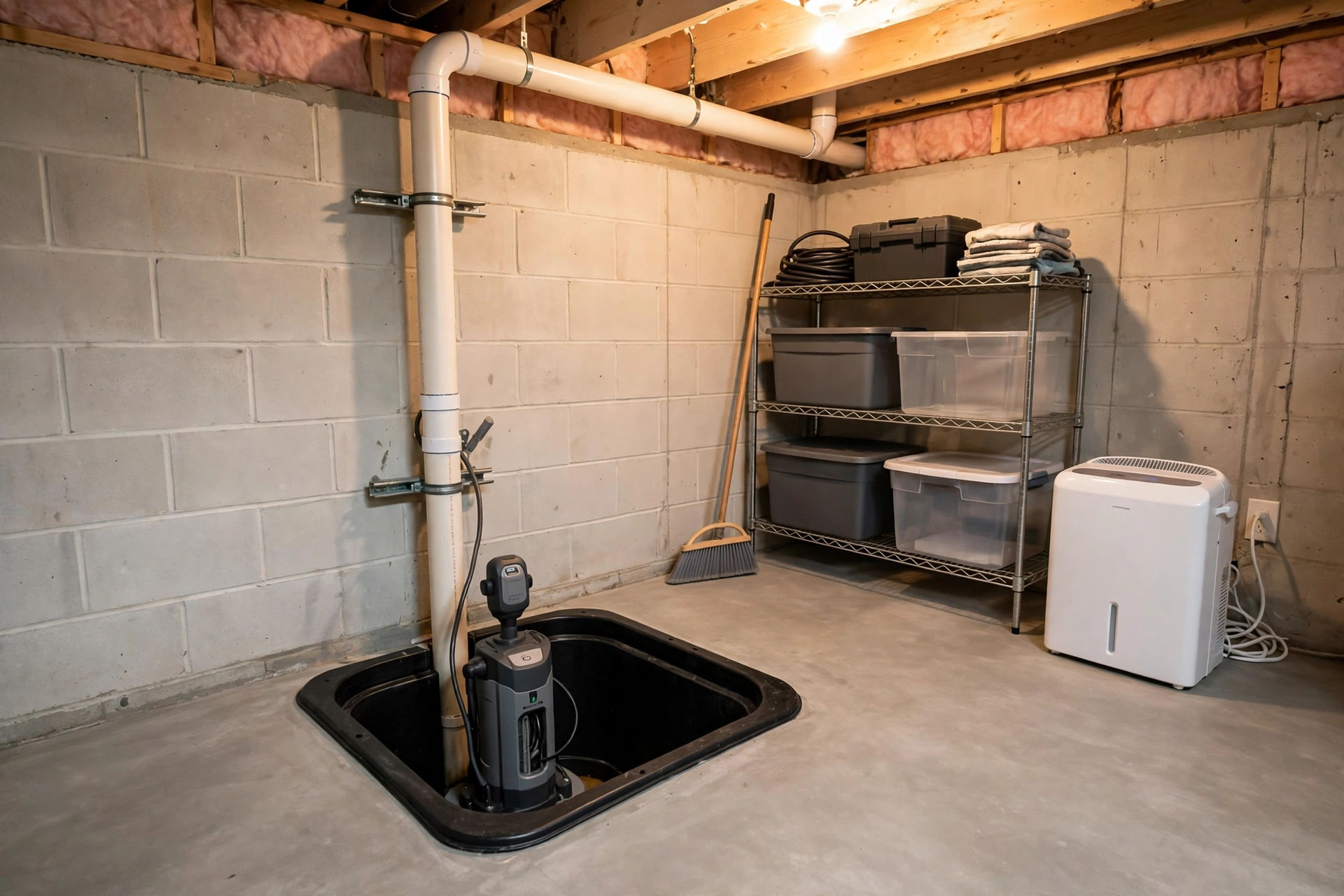
The cruel part of a sump pump failure is the timing. Pumps quit during the storms that need them most, when rain is heavy, soil is saturated, and the basin fills faster than any other week of the year. We handle sump pump failure cleanup in Bowie by extracting basin overflow, drying the slab and walls it crossed, and checking the full perimeter of the basement, because basin water travels farther than the puddle near the pit suggests.
In Bowie, that lowest room is rarely a bare utility space. Finished basements are standard in Somerset, Woodmore, Fairwood, and Mitchellville, so a failed pump often means a wet family room. Clay soil holds groundwater against the foundation long after rain stops.
A pump can lose capacity with age, stick on a float switch, or stop outright. Power loss during a storm stops even a healthy pump, and a clogged discharge line can send water back toward the basin.
Once the basin overflows, spread follows the slab. Water runs to the lowest edges, wicks into carpet and pad, and climbs the base of drywall. It can pass under a wall into the next room while the room beside the pit looks only damp. We note what we find at the pit on the first visit. Replacing the pump belongs to the plumbing trade, before the next storm.
Extraction starts at the pit and works outward across the slab. Wet carpet pad along affected walls generally comes out, since pad holds basin water against the floor and dries poorly in place. Carpet is assessed by how long water sat, since basin water is not treated as clean supply water.
Baseboards come off where wall bases read wet, letting air reach the bottom plate and lower drywall. Dehumidifiers pull moisture from masonry and framing, and air movers run along the perimeter, matching where the water went. Perimeter readings close the job, and equipment leaves when they meet dry goals under the IICRC S500 standard.
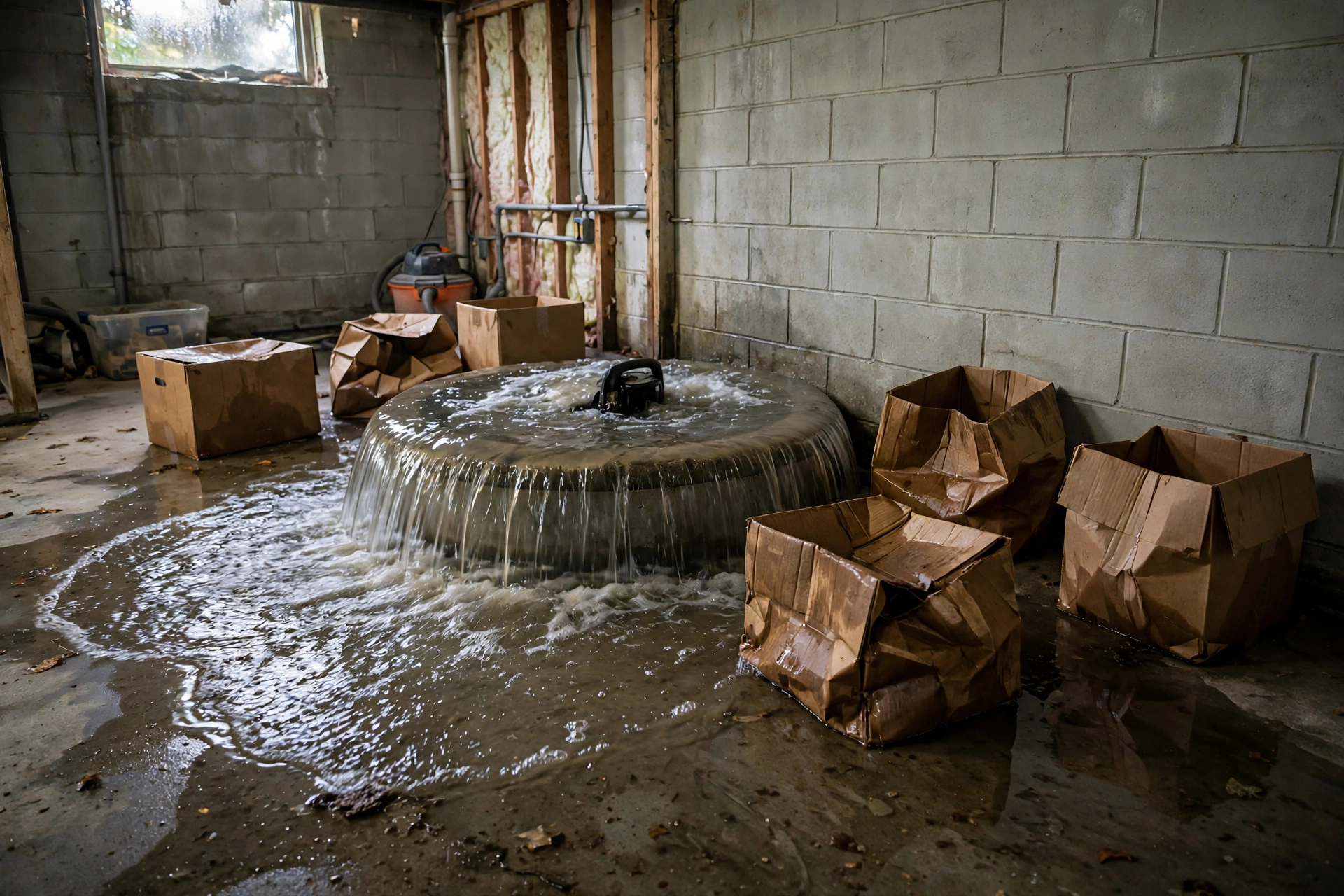
A sump pump in Somerset stopped during an overnight storm, and basin water spread across a finished basement family room and under a bedroom wall before morning. We extracted water across both rooms, removed wet carpet pad along three walls, and took off baseboards where wall bases read wet to dry the framing. The failed pump was documented at the pit for the plumbing repair that followed, and perimeter readings were verified around the whole basement before equipment was removed.
No Bowie company publishes a local price list, so planning figures here are published figures, labeled as such. For this service, published figures in the brief put sump pump failure cleanup at $1,400 to $3,600. Published guides put water mitigation commonly at $1,300 to $5,800, and the average restoration project at $3,000 to $3,867 in published cost guides.
A small overflow caught within hours sits low in the range. A finished basement where water crossed several rooms and ran overnight sits higher. How far the water traveled along the slab is the main driver.
Test the pump on a dry week. Pour water into the basin, watch it cycle, and confirm the discharge runs outside. A pump that sounds strained in calm weather will not improve during a July downpour. Keep boxes on shelving rather than directly on the slab, and after any storm check the wall bases by hand to catch wicking early.
Published figures for this service put cleanup at $1,400 to $3,600. Published guides put water mitigation commonly at $1,300 to $5,800, with the average restoration project at $3,000 to $3,867. Finished basements with pad removal land higher inside the range.
Pump replacement belongs to the plumbing trade. We document the failure at the pit, extract the overflow, and dry the basement, so the repair and cleanup record line up.
Basin water spreads along the slab and under walls, reaching rooms with no standing water. Perimeter readings find that travel and prevent a missed wet wall from staying damp.
No. Basin water has contacted soil and the pit, so porous material it soaked, such as pad, is generally removed rather than dried in place. Hard surfaces are cleaned first.
Many losses of this kind dry in three to four days. Larger perimeters take longer. Readings around the full basement decide the finish.
Keep clear of wet areas near outlets. Photograph the basin and affected rooms, move dry belongings off the slab where safe, and send the quote form.
Tell us what got wet and when. We read every request that comes in and respond with the published range for that kind of loss and the next step, starting with a visit to take moisture readings and scope the drying plan.
Prefer to talk it through first? Send the form and we will call you back at the number you give us.