Beltsville counted 20,133 residents in the 2020 Census and sits in Prince George's County, northwest of our Bowie base. Its water calls have a particular flavor: the slow kind. A supply line weeping inside a wall. A water heater dripping into its pan for weeks. Condensation and a small roof leak feeding a dark patch in a closet corner. Beltsville homeowners often meet us not on the worst day of a flood, but on the day a smell or a stain finally gets explained, and by then mold is frequently part of the story. We are Bowie Water Damage Restoration Company, and we handle both the sudden losses and the slow ones here.
Water Damage Restoration in Beltsville, MD
Mold remediation work is a central service in Beltsville, and it deserves a plain explanation. Growth follows moisture, so the job starts by finding and stopping the water source, then containing the affected area, removing material that cannot be cleaned, and cleaning what can. The work follows IICRC S520 and industry remediation standards. Maryland does not license mold remediation: the Maryland Mold Remediation Services Act was terminated on July 1, 2019, so no company holds that license, whatever its website says.
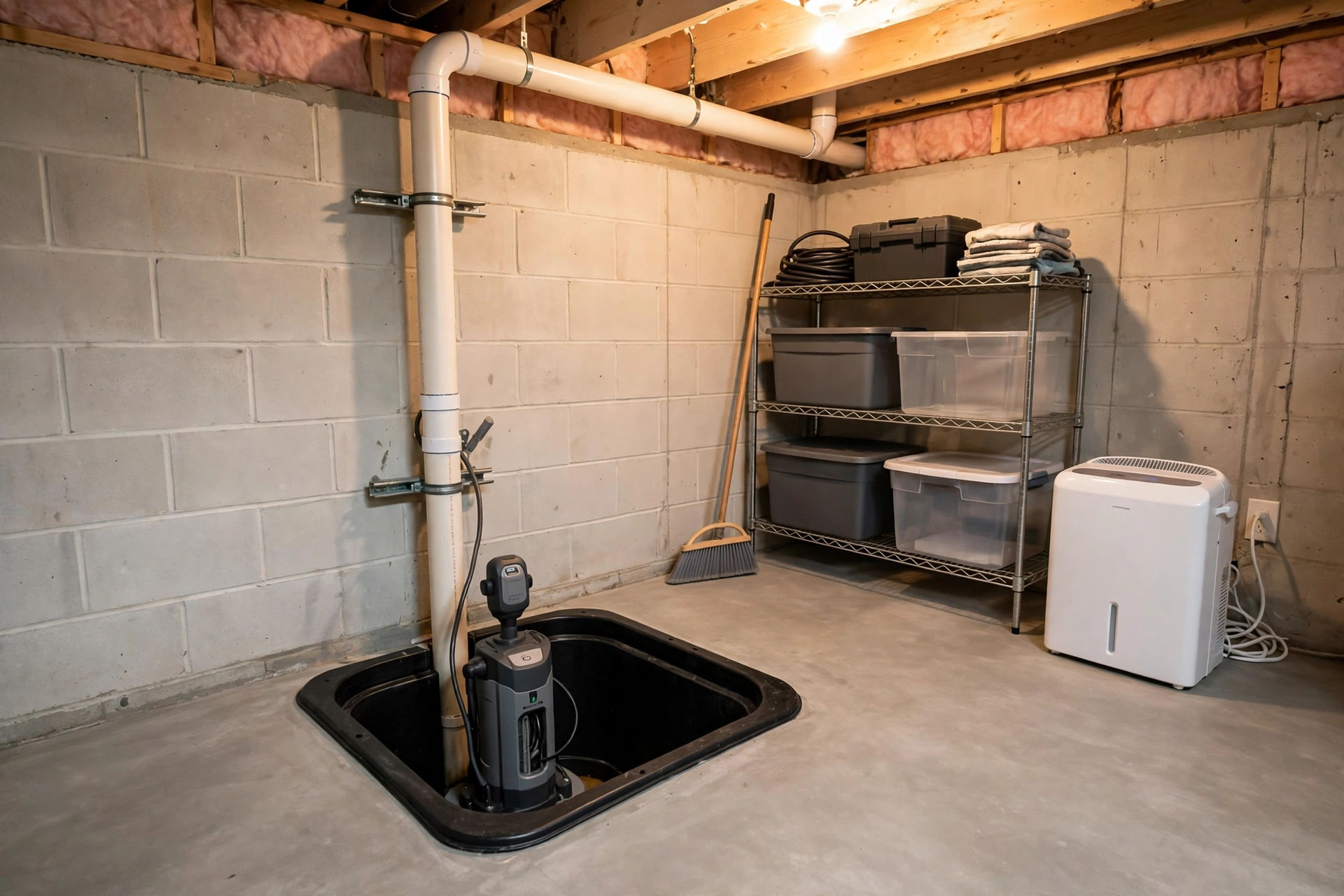
The sudden losses still arrive. Emergency water extraction handles standing water from a burst pipe or a failed appliance. Structural drying and dehumidification brings walls, floors, and framing back to dry readings under the IICRC S500 drying approach. Basement water damage restoration covers finished and unfinished lower levels alike, including sump pump failure cleanup when a pump quits during a storm.
Ceiling and wall water damage from roof leaks, crawl space water damage under the house, and hardwood floor water damage all show up in the Beltsville mix. Reconstruction after water damage closes the job when rooms need to be put back, and insurance claim documentation runs alongside from the first visit.
Recent Project: Mold Remediation in Beltsville
A homeowner noticed a persistent musty smell in a first floor closet and found dark growth on the wall behind stored boxes. The source was a slow supply line leak inside the shared wall, wetting drywall and insulation over a long period. We stopped the leak, contained the closet and the adjoining wall section, removed the affected drywall and insulation, cleaned the framing, and dried the cavity to clear readings before the wall was closed again.
Water Damage Restoration Cost in Beltsville, MD
No local company publishes a Beltsville price list for this work, so published figures are the honest reference. Published cost guides put water mitigation commonly at $1,300 to $5,800, and the average restoration project at $3,000 to $3,867. A full insurance claim project including rebuild averages around $13,954 in published data, and that number is an insurance claim figure including reconstruction, not a standard mitigation price.
Mold work prices on area and access. A contained closet wall is one kind of job; growth spread through a finished basement is another entirely. No figure should be quoted before the moisture source is found, because remediation without fixing the source is money spent twice.
Why Beltsville Homeowners Call Bowie Water Damage Restoration Company
Slow leaks reward patience and punish shortcuts. Our Beltsville visits start with moisture mapping around the visible problem, since the stain a homeowner sees is rarely the whole footprint. That habit keeps a small remediation from becoming a second, larger one six months later.
Straight talk is the other reason. If the growth is a small surface patch from bathroom humidity, we will say so and will not sell a containment job for it. If the wall cavity is involved, we explain exactly why the scope is bigger.