Bowie, Maryland
Flood Damage Cleanup in Bowie, MD
Flood Damage Cleanup in Bowie, Maryland, with published price ranges up front, the loss scoped with moisture readings on site, and one written figure before any work begins.

Bowie, Maryland
Flood Damage Cleanup in Bowie, Maryland, with published price ranges up front, the loss scoped with moisture readings on site, and one written figure before any work begins.
Flood water arrives from outside, and it brings the outside with it. Soil, road grit, mulch, leaf litter, and whatever the water crossed on its way to your door all end up on your floors. We handle flood damage cleanup in Bowie for homes hit by heavy rain, rising groundwater, and overflow from low ground near the Patuxent River side of the city and the Collington branch, starting with safe removal of that water and the sediment it leaves behind.
Cleanup after a flood differs from cleanup after a plumbing leak in one basic way. The water itself must be treated as contaminated until proven otherwise. Flood water is handled as Category 3 under the IICRC S500 standard, which shapes protective equipment, what porous material can be cleaned, and what must come out. Carpets, pads, and drywall that took flood water are judged by a stricter rule than clean water losses, and we apply that rule even when a homeowner wants to save them.
Work begins once it is safe to enter. Electrical hazards get checked before anyone steps into standing water near submerged outlets or appliances. Pumping and extraction then move water out in stages, so sediment settles where we can collect it instead of smearing it across every surface.
Mud is its own job. A thin silt layer holds moisture against flooring, stains grout, and turns to fine dust that travels through the house once it dries. We shovel and wet vacuum silt while it is still wet, bagging debris for disposal rather than hosing it toward drains that may already be stressed.
Contents get triaged at the door of each room. Washable hard goods move to a clean zone. Porous items that absorbed flood water get listed, photographed, and set aside for the disposal decision, which stays with the homeowner unless a health call is clear.
Once bulk water and silt are gone, surfaces get washed down. Concrete, tile, and sealed surfaces can be cleaned and disinfected thoroughly. Sound framing and subfloor get cleaned, treated, and dried under the same measured process used after any large loss. Wall bases that wicked flood water usually need the lower drywall removed to a cut line above the wet zone, because the cavity behind it holds contamination that surface cleaning cannot reach.
Drywall is cheap compared to a lingering contamination problem inside a closed wall. Opening the base lets us clean the sill plate, remove wet insulation, and dry the cavity fully. In Fairwood finished basements we map that cut line room by room so only the affected height and length come out.
Saturated clay soil adds one more delay. Pressure from that wet soil can push moisture through slab joints for days after indoor cleanup ends, so final readings wait until the slab and lower walls hold steady, not just until they first dip.
Summer storms define the Bowie flood calendar. A cell can stall over Prince George's County and drop several inches of rain in an hour on ground already wet from the day before. Clay soil sheds that water slowly, so it ponds against foundations, fills window wells, and finds the basement door threshold. Homes at the low end of a street take water first, and neighbors on the same block can have very different outcomes from the same storm.
Groundwater rise is quieter. No dramatic entry point, just a sump pit filling faster than the pump can move it and dampness spreading from the lowest corner of a slab. Low lots along the Collington branch and on the Patuxent side of Bowie see this pattern most.
Repeat flooding changes the advice. A basement that has taken water twice in three summers needs a drainage and sump capacity conversation alongside cleanup. We stay inside our scope, cleanup, drying, and documentation, and flag those drainage questions plainly for the right contractor.
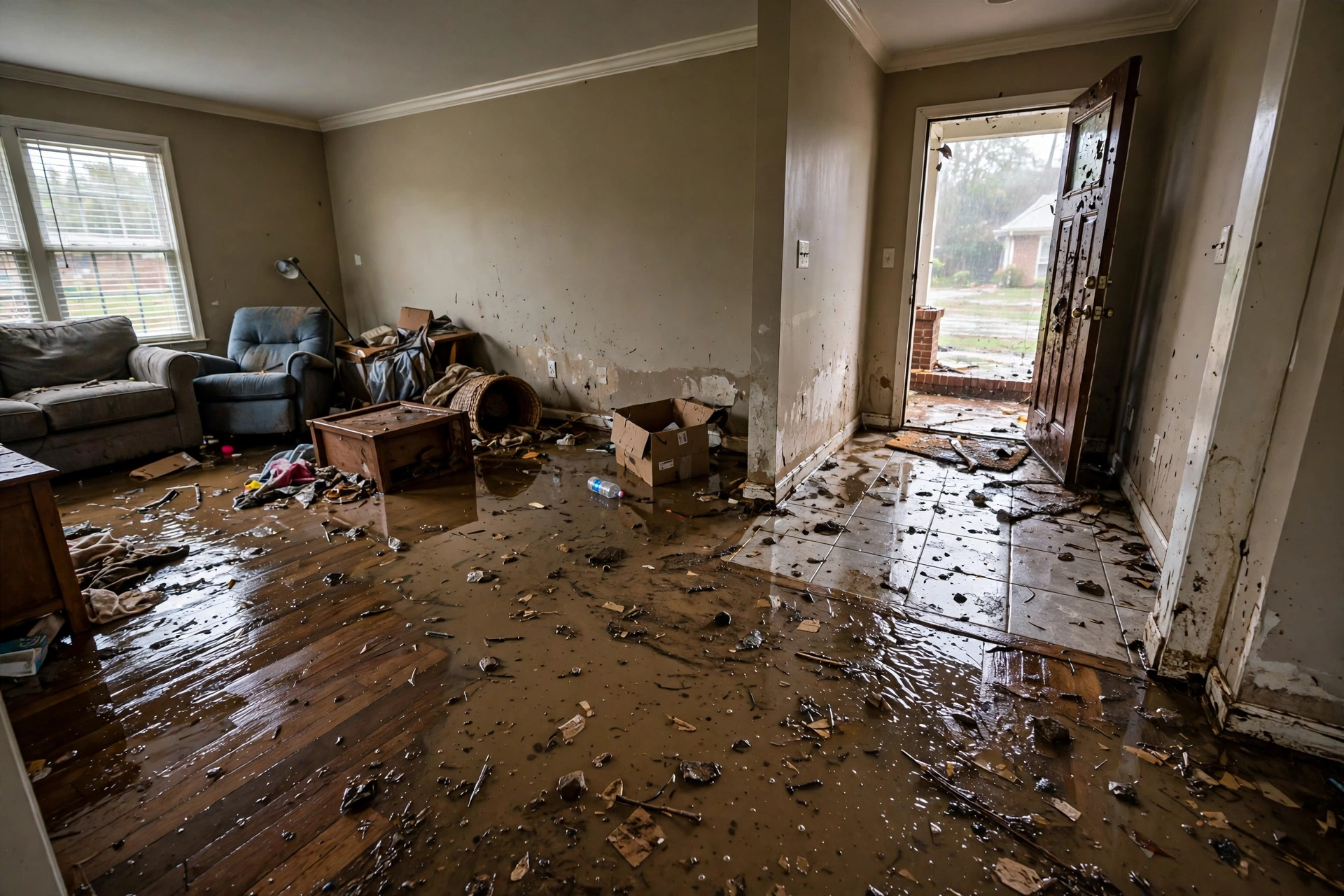
A stalled summer storm dropped heavy rain over Fairwood and pushed water through a basement door threshold into a finished lower level with carpet, drywall, and a bathroom. We pumped and extracted the standing water, removed silt and saturated carpet and pad, and cut the lower drywall to a clean line above the wick zone to clean and dry the wall cavities. The bathroom tile and concrete areas were washed and disinfected, and the full space was dried under monitoring until readings held steady.
Budgeting after a flood starts with a caution: you will not find a Bowie price list to copy them from. What follows is labeled as published figures from national cost guides. Those published figures place flood damage cleanup for a typical Bowie home at $2,400 to $5,800, pushed toward the top by contamination handling and material removal, while water mitigation commonly runs $1,300 to $5,800 per project. An average restoration project sits at $3,000 to $3,867 in published guides, often below a flood loss with drywall cuts and disposal added.
Depth and footprint set the bill. An inch of water in one room differs sharply from a basement that held a foot overnight. Silt volume, material removal, and drying days all move the total. For context only, published data puts a full insurance claim project including rebuild at around $13,954 on average, an insurance claim figure including rebuild rather than a cleanup price. Your firm figure follows the on site assessment.
Coverage language matters here, and it surprises people. A standard homeowner policy usually covers sudden and accidental water damage from inside the home, such as a burst pipe. Rising water from outside generally requires a separate flood policy, and sewer backup usually requires a specific endorsement. We cannot interpret your policy for you. What we provide is a thorough documentation file: dated photos, moisture logs, a list of removed materials, and a clear scope of work.
Act on documentation early, even before coverage is clear. Photograph waterlines on walls and keep receipts from the first days. A flood scene gets cleaned fast by necessity, so the record is the scene once work begins.
Published figures put water mitigation commonly at $1,300 to $5,800, with flood damage cleanup usually at $2,400 to $5,800 for a typical Bowie home. Published guides put an average restoration project at $3,000 to $3,867, though flood jobs with material removal often exceed that average. Depth, footprint, and disposal needs set your firm figure after assessment.
Yes. Flood water is handled as Category 3, the most contaminated category in the IICRC S500 standard, because it crosses soil, roads, and drains before entering. That status changes protective steps and means porous materials such as carpet, pad, and upholstery that absorbed flood water are removed rather than cleaned.
Drywall that wicked flood water is typically cut above the visible wet line so the cavity can be cleaned and dried. The exact height follows meter readings and the wick height in your walls. Sections that stayed dry and test clean are left alone, and the cut map is explained room by room before work starts.
Usually not for rising outdoor water, which generally needs a separate flood policy. Sudden internal failures are the usual homeowner policy territory, and sewer backup often needs an endorsement. Check your policy or ask your carrier directly. Either way, we document the loss fully so you have the file a claim or a personal record requires.
You can photograph everything and move valuables from dry areas. Avoid standing in basement water where outlets or appliances are submerged. Leave washing until after assessment, because early hosing can spread contamination and erase waterline evidence.
Initial removal often takes a day, with washing, drywall cuts, and monitored drying running several more days. Saturated ground feeding a slab can extend drying. Final clearance rests on steady readings, not a preset number of days.
Tell us what got wet and when. We read every request that comes in and respond with the published range for that kind of loss and the next step, starting with a visit to take moisture readings and scope the drying plan.
Prefer to talk it through first? Send the form and we will call you back at the number you give us.