Serving Arnold, Maryland
Water Damage Restoration in Arnold, MD
Water Damage Restoration in Arnold, Maryland, from our Bowie base: published ranges up front, the loss scoped with moisture readings on site, and one written figure before work begins.
Serving Arnold, Maryland
Water Damage Restoration in Arnold, Maryland, from our Bowie base: published ranges up front, the loss scoped with moisture readings on site, and one written figure before work begins.
Arnold, in Anne Arundel County, counted 24,064 residents in the 2020 Census. It sits on higher ground than many of the river communities around it, which changes the water picture. The classic Arnold call is not a flood. It is a January cold snap, a pipe in an exterior wall or a crawl space that froze overnight, and a split line discovered only when the thaw lets it run. Bowie Water Damage Restoration Company serves Arnold from our base in Bowie.
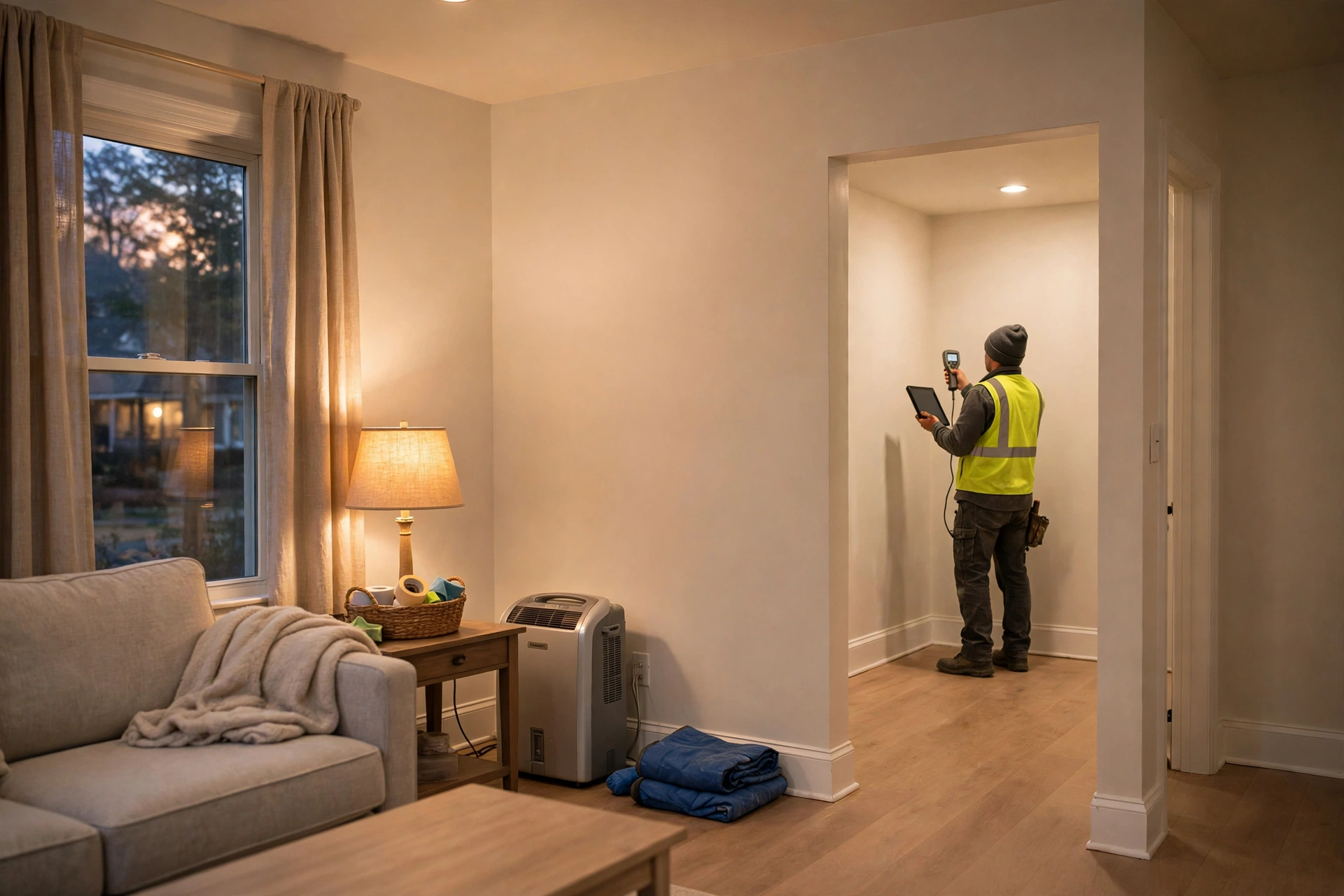
Frozen pipe water damage is the Arnold specialty by necessity. A frozen line rarely leaks where it froze, so our first task is tracing the true wet footprint with moisture meters before any drying equipment is placed. Emergency water extraction clears standing water, and structural drying and dehumidification then runs against daily readings, following the drying approach set out in the IICRC S500 standard.
Crawl space water damage shows up often here as well. A slow leak under the house can run for weeks, and a musty smell rather than a puddle usually gives it away. We handle basement water damage restoration for homes with finished lower levels, flood damage cleanup after intense rain, and roof leak water damage where flashing or a failed shingle line lets water into ceilings and walls.
Sewage cleanup is scoped separately because contaminated water demands a different cleaning standard. Mold remediation work, done following IICRC S520 and industry remediation standards, treats growth that follows an undetected leak. Maryland does not license mold remediation, so treat any such claim from any company as a warning sign. For losses that pass mitigation, reconstruction after water damage restores the rooms, and insurance claim documentation keeps the paper trail a carrier expects.
A supply line in an exterior wall froze during a cold spell and split, then ran for hours after the thaw while the home was empty. Water crossed two first floor rooms and soaked into the crawl space below. We extracted the standing water, removed wet insulation under the subfloor, dried the framing and floors against daily moisture readings, and replaced the damaged section of flooring finish in the entry.
There is no published Arnold price list for restoration work, and no honest company will hand you one. Published figures are the right frame. Water mitigation commonly runs $1,300 to $5,800 in published cost guides, and the average restoration project sits at $3,000 to $3,867. A full insurance claim project including rebuild averages around $13,954 in published data, which is an insurance claim figure with reconstruction included, not the price of drying a house.
Frozen pipe jobs swing on discovery time. A split caught within the hour can mean extraction and two days of drying, while the same split running through a weekend adds flooring, wall openings, and crawl space work. Saturated insulation and subfloor under the house is the second big variable, and it cannot be priced until someone looks.
Method matters most. Freeze damage is routinely under scoped by companies that dry the room they can see and miss the cavity they cannot. We meter the walls, the floors, and the space below, and the drying plan follows those readings.
Arnold homeowners also hear the whole picture early. If a pipe split because the line sits in a vulnerable exterior wall, we say so plainly, because drying the house without naming the cause invites a repeat next winter.
Published figures put water mitigation commonly at $1,300 to $5,800, and the average restoration project at $3,000 to $3,867. A freeze break caught early sits toward the lower end, while one that ran into floors and the crawl space moves up. The visit sets the firm figure for your home.
Arnold is in Anne Arundel County, and county permitting applies in general terms when a job moves into reconstruction, such as replacing structural material, drywall, or flooring systems. Extraction and drying on their own generally do not involve a permit. We raise the county side during scoping whenever rebuild work is part of the plan.
Low flow at one fixture and a musty odor from the crawl space are the common tells. Shut off the water at the main valve if you suspect a split, since the leak often starts at thaw.
Saturated fiberglass insulation usually comes out, because it holds moisture against the subfloor. Framing and subfloor often dry in place once the wet insulation is removed and air is moving. The readings on site settle it.
No. Arnold is on the eastern edge of our ring, about twenty road miles from our Bowie base, and drying jobs need repeat visits by design. Those check visits are built into the schedule when the equipment is placed, not added as an afterthought.
Homeowner policies usually cover sudden and accidental water damage, and a burst frozen pipe is a common example, while damage from a leak that ran undetected for months is often disputed. We document the loss with photos and readings from the first visit so the claim file reflects what actually happened.
Tell us what got wet and when. We read every request that comes in and respond with the published range for that kind of loss and the next step, starting with a visit to take moisture readings and scope the drying plan.
Prefer to talk it through first? Send the form and we will call you back at the number you give us.